
한국어 · English · 简体中文 · 繁體中文 · 日本語
By Daebbang
“I’ve heard Korean fillers last about a year, while imported fillers last two. Wouldn’t it be better to pay more for an imported filler?”
It’s an understandable question during a filler consultation. When prices differ and you’re told the results last for different lengths of time, choosing the longer-lasting product can seem like better value.
But we can’t divide fillers neatly into one year for Korean products and two years for imported ones. A comparative study found that improvement after treatment with a Korean product was still observed in the cheeks at two years. [1]
What I also want to emphasize is that the most expensive filler isn’t necessarily the best filler for you. Alongside how long it lasts, we need to consider whether it suits the area being treated and what safety evidence is available.
Today, let’s focus on hyaluronic acid (HA) fillers, which are commonly used to restore volume.
Can a Korean filler still have an effect after two years?
Yes. One study compared the Korean product Neuramis Volume Lidocaine with the imported product Juvéderm Voluma Lidocaine, treating opposite cheeks in Korean participants.
The original study enrolled 88 people, and 69 entered the extension study. Among these 69 participants, at 104 weeks—about two years—after the final treatment, the proportion with at least a one-grade improvement in cheek hollowing was about 74% on the Neuramis side and about 72% on the Voluma side. [1]
These figures don’t tell us how much filler remained. They are the proportions of participants who met the study’s definition of improvement. Treatment was given to achieve the correction needed, and an early touch-up was allowed. The results therefore don’t mean that everyone will get two years of benefit from the same 1 cc injection.
We should keep in mind that this was a manufacturer-supported study of specific products used in the cheeks. Even so, it shows why “Korean fillers stop working after a year” doesn’t apply to every product.
Does that mean all fillers last equally long?
Some studies have found differences. The distinction between Korean and imported products is too simple; that doesn’t mean every filler has the same longevity.
A 2011 study compared Juvéderm Ultra Plus and Perlane on opposite sides of the face in 80 people with deep nasolabial folds. At 12 months, the proportions whose folds were rated by a physician as at least one grade better than before treatment were 70% and 45%, respectively. [2]
Both are imported products in Korea. In other words, even within the imported category, results can differ depending on the exact product. This was also a manufacturer-supported study of the formulations available at the time, under particular treatment conditions for nasolabial folds. It shouldn’t be read as a ranking of every product sold today or of their performance in other areas.
Even when fillers use the same basic ingredient, hyaluronic acid, their concentration, cross-linking method, and gel structure can affect their firmness, how they deform, and how they break down. The treatment area and depth, the amount injected, and the condition of the surrounding tissue also matter. [3]
And a study following patients for one year is not the same as evidence that the effect ends at exactly one year. Nor can we assume a two-year result in the cheeks applies equally to the lips. Any longevity figure needs to be considered alongside the product and treatment conditions.
Does a longer-lasting filler contain more BDDE?
Unmodified hyaluronic acid breaks down relatively quickly in the body. To stabilize the gel, its molecules are connected through a process called cross-linking. BDDE is a widely used cross-linking agent that helps form these connections. [4]
But “how much BDDE was used” isn’t enough to judge a filler. Cross-linker-derived components bound to the hyaluronic acid structure are different from BDDE left over without reacting. The amount used during manufacturing does not all enter the face as unreacted BDDE.
Researchers look at both the degree of modification (MoD), which describes how much cross-linker-derived material is bound to the hyaluronic acid, and cross-linking efficiency, the proportion of that material that actually connects molecules to one another. The degree of modification is not the same measurement as the amount of residual, unreacted BDDE. [5]
A 2024 study examined the structures of 13 fillers, including Lorient No. 6. Degree of modification and cross-linking efficiency varied between products. Even products with similar degrees of modification differed in the proportion used to form actual connections. [5]
Put simply, using more connecting material is different from efficiently making the connections you need. When assessing a product, it is also worth considering how it achieves the desired gel properties while limiting unnecessary chemical modification, and how purification controls unreacted components and impurities.
However, this study analyzed filler structure; it did not compare rates of inflammation in patients. A lower degree of modification alone does not establish that a product causes fewer delayed inflammatory reactions or is the safest option. [5]
If swelling appears months later, is it an allergy caused by too much BDDE?
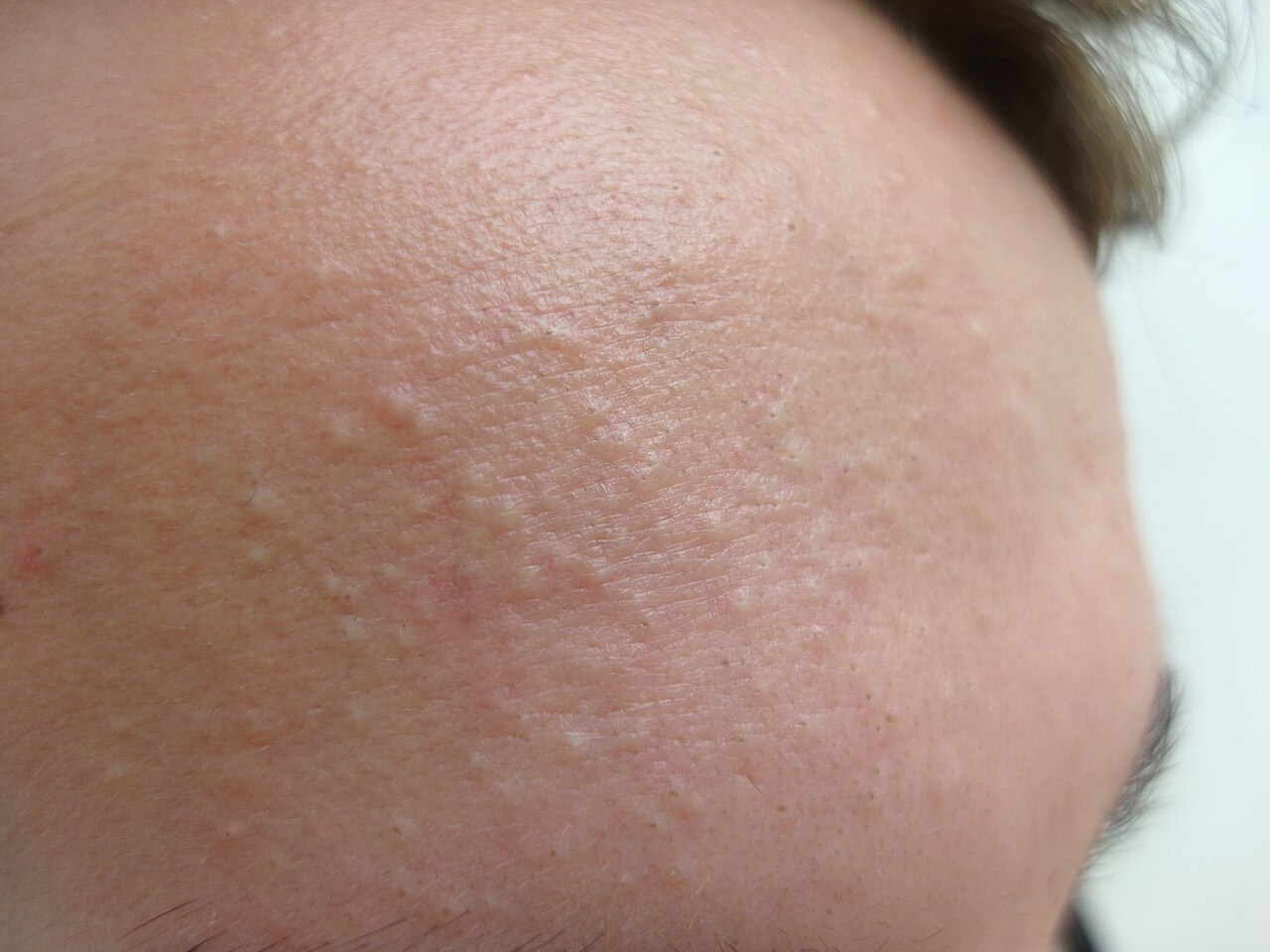
Sometimes an area is fine after filler treatment, then develops swelling, redness, or a firm lump weeks or months later. These symptoms can occur with a delayed inflammatory reaction, but swelling and lumps that appear later can have several causes.
An allergic reaction can be one of them. But not all late swelling is an allergy. The literature also distinguishes delayed inflammatory reactions from confirmed delayed-type hypersensitivity. [7]
Product components and impurities, breakdown processes, infection or bacterial biofilms, immune status, and injection technique are being studied as possible causes or triggers. No single cause explains every case. [4]
There is also research into BDDE’s potential to cause sensitization and the substances formed during breakdown. However, findings from skin contact allergy studies or laboratory experiments cannot be taken directly as rates of allergy after filler injections. [6]
So we can’t simply conclude that longer-lasting fillers contain more BDDE and therefore cause more delayed allergic reactions. Alongside structure and purity, we need to look at which adverse reactions have actually been observed in patients and how often.
If swelling or lumps develop later after treatment, have the cause assessed before rushing into another filler injection.
So is a more expensive filler the better choice?
A higher price doesn’t automatically mean a better filler.
Products differ in their clinical evidence and properties, and people want different results. A price list alone can’t tell you which product best suits your face.
When choosing a product, I recommend considering the evidence for its effect and longevity in your treatment area, its safety data, and whether it suits your face and your response to previous treatments.
Supporting a hollow cheek and adding natural-looking volume to lips that move frequently call for different properties. Lasting a long time in one area doesn’t make a product the best option everywhere. [3]
If you’ve had recurrent swelling or lumps after filler before, be sure to tell your clinician which product you received, when, and where. That information is more directly useful for choosing a product and planning treatment than the price alone.
Choose a product that suits your treatment goal, review its evidence for effectiveness and safety, and use only as much as you need. That’s the approach I recommend. Your clinician’s injection technique and infection control also matter.
Can I get more filler as soon as its stated duration has passed?
This isn’t a decision to make by the calendar alone. Less visible volume doesn’t necessarily mean all the filler has disappeared.
An MRI study examined 33 people who reported having had no further filler treatment in the midface for at least two years. Signals interpreted as filler were seen in all of them. However, some had incomplete treatment histories, and some had undergone imaging because of swelling. This doesn’t mean filler remains for the same length of time in everyone, or that the full amount originally injected is still present. [8]

If this is your first filler treatment, or your first treatment in a new area, and you are recovering without unusual symptoms, a follow-up assessment at around 2–4 weeks is a good idea. An expert consensus also recommends assessing the result at this stage. This doesn’t mean everyone needs a touch-up injection. [9]
After that, I recommend holding off on further injections while the shape is maintained, and having it reassessed when hollowness or a change in contour starts to bother you again. You don’t necessarily need the same amount as the first time.
Don’t decide solely on whether a filler is Korean or imported, its price, or how many years you’ve been told it lasts. Discuss the product, timing of further treatment, and amount needed with your clinician, taking into account your face now and your previous treatments.
Take-home messages
- “One year for Korean fillers, two years for imported fillers” is not a rule that applies to every filler. Longevity can vary with the exact product and treatment area.
- The most expensive filler isn’t necessarily the best one for you. Consider its evidence for effectiveness and safety, and whether it suits your treatment goal.
- Cross-linking technology and control of residual components also deserve attention. But a BDDE amount or degree-of-modification figure alone cannot determine longevity or the risk of delayed inflammation.
- Don’t assume every late swelling or lump is an allergy. Have the cause assessed before having further treatment.
- If the result is holding up well, you don’t need another injection simply because a set date has arrived. Base any further treatment on your current appearance and treatment history, using only as much as needed.
References
- Jung JM, et al. (2021). A multicenter, randomized, double-blind comparison of two hyaluronic acid fillers in mid-face volume restoration in Asians: A 2-year extension study. Dermatologic Therapy. DOI: 10.1111/dth.14787.
- Goodman GJ, et al. (2011). A comparison of the efficacy, safety, and longevity of two different hyaluronic acid dermal fillers… Clinical, Cosmetic and Investigational Dermatology. DOI: 10.2147/CCID.S26055.
- de la Guardia C, et al. (2022). Rheologic and Physicochemical Characteristics of Hyaluronic Acid Fillers: Overview and Relationship to Product Performance. Facial Plastic Surgery. DOI: 10.1055/s-0041-1741560.
- Lee W, et al. (2024). Etiology of Delayed Inflammatory Reaction Induced by Hyaluronic Acid Filler. Archives of Plastic Surgery. DOI: 10.1055/a-2184-6554.
- Lee W, Yang EJ. (2024). Structural Analysis of Hyaluronic Acid Fillers Using Nuclear Magnetic Resonance: Implications for Quality Control and Clinical Performance. Polymers. DOI: 10.3390/polym16202878.
- Wojtkiewicz M, et al. (2024). Are We Overlooking Harms of BDDE-Cross-Linked Dermal Fillers? A Scoping Review. Aesthetic Plastic Surgery. DOI: 10.1007/s00266-024-04262-0.
- Chung KL, et al. (2020). A Systematic Review of the Literature of Delayed Inflammatory Reactions After Hyaluronic Acid Filler Injection… Aesthetic Surgery Journal. DOI: 10.1093/asj/sjz222.
- Master M, Azizeddin A, Master V. (2024). Hyaluronic Acid Filler Longevity in the Mid-face: A Review of 33 Magnetic Resonance Imaging Studies. Plastic and Reconstructive Surgery–Global Open. DOI: 10.1097/GOX.0000000000005934.
- Goodman GJ, et al. (2020). Facial aesthetic injections in clinical practice: Pretreatment and posttreatment consensus recommendations to minimise adverse outcomes. Australasian Journal of Dermatology. DOI: 10.1111/ajd.13273.


Leave a Reply